
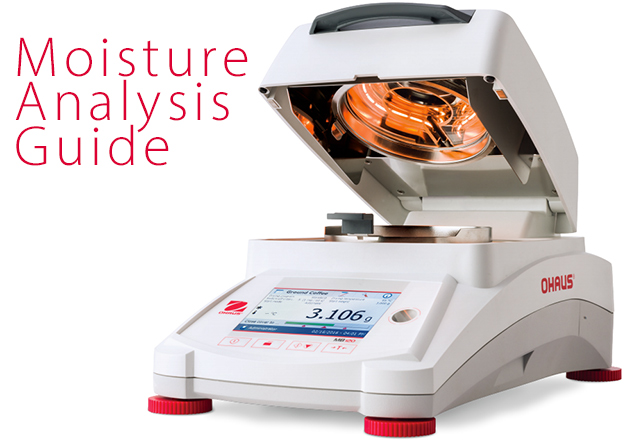
Reliable Moisture Testing for Wood, Food, Grain, Compost, Plastics, Paper and Industrial Materials
Accurate moisture testing is essential for quality control, production efficiency, storage stability and product consistency.
Ansutek NZ supplies OHAUS moisture analysers to help New Zealand businesses measure moisture content quickly, accurately and repeatably across a wide range of materials, including wood chips, sawdust, wood shavings, food powders, dairy powders, grain, seed, compost, soil, plastic resin, pellets, paper and cardboard.
What Moisture Content Is
Moisture content is the amount of water contained in a material. It is usually shown as a percentage of the total sample weight. Moisture may be present on the surface of a sample or held within the material itself.
Measuring moisture content is important because water levels can affect product weight, quality, shelf life, processing performance, packaging, storage and compliance. Even small changes in moisture can influence how a product behaves during production, transport or use.
Why Moisture Testing Matters
Moisture testing helps businesses control quality and reduce waste. Materials that are too wet may be difficult to process, store or sell. Materials that are too dry may lose weight, become brittle, create dust, or fail to meet required specifications.
Regular moisture analysis can help improve:
- Product consistency
- Storage stability
- Processing efficiency
- Batch-to-batch quality control
- Shelf life and packaging performance
- Raw material acceptance checks
- Production and drying process control
- Compliance with internal or industry standards
For industries such as forestry, food production, agriculture, recycling, plastics, packaging and laboratory testing, accurate moisture measurement supports better decision-making and more reliable results.
How Loss-on-Drying Moisture Analysers Work
Loss-on-drying moisture analysers determine moisture content by measuring weight loss during drying. A sample is placed on a sample pan, weighed, heated and dried. As moisture leaves the sample, the analyser continuously monitors the change in weight.
Once the drying process is complete, the moisture analyser calculates the percentage of moisture based on the weight lost during heating.
This process combines weighing and drying in one compact instrument, making it faster and easier than traditional oven drying methods. OHAUS moisture analysers are designed for repeatable results and are suitable for laboratory, quality assurance and production environments.
Moisture Analyser vs Oven Drying
Traditional oven drying usually requires a separate balance, drying oven, sample containers and manual calculations. The process can take several hours, depending on the material and method used.
A moisture analyser offers a faster and more convenient alternative. It weighs, heats, dries and calculates results in one instrument. This can reduce testing time, simplify operation and improve workflow for routine moisture testing.
Oven drying may still be used for some reference methods or regulated procedures, but a moisture analyser is often preferred for quick checks, production testing and day-to-day quality control.
Key advantages of a moisture analyser include:
- Faster results than conventional oven drying
- Integrated weighing, drying and calculation
- Smaller sample size requirements
- Repeatable testing methods
- Easy operation for routine quality control
- Reduced manual handling and calculation
- Choosing an OHAUS Moisture Analyser
Choosing the right OHAUS moisture analyser depends on your material, testing method and required accuracy. Different applications may need different temperature ranges, readability, heating technology, sample sizes and method storage options.
When selecting an OHAUS moisture analyser, consider:
- The type of material being tested
- Expected moisture range
- Required accuracy and repeatability
- Sample size and sample preparation needs
- Heating temperature requirements
- Testing speed
- Number of operators
- Data recording and method storage requirements
- Whether the analyser will be used in a lab, production area or quality control station
Ansutek NZ can help you compare OHAUS moisture analyser options and choose a suitable model for your application.
Wood Chip Moisture Testing
Wood chip moisture testing is important for forestry, biomass energy, fuel supply, landscaping, composting and wood processing. Moisture content can affect weight, combustion performance, storage, transport cost and processing efficiency.
An OHAUS moisture analyser can help measure wood chip moisture content quickly for incoming material checks, drying process control and quality assurance. For best results, wood chips should be representative of the batch and may need to be cut or reduced in size to improve drying consistency.
Sawdust and Wood Shavings Moisture Testing
Sawdust and wood shavings moisture testing is commonly used in pellet production, animal bedding, timber processing, packaging and manufacturing. Moisture levels can affect compaction, flow, dust levels, storage stability and final product quality.
Because sawdust and shavings can vary in particle size and density, samples should be mixed well before testing. A thin, even layer on the sample pan helps support repeatable drying and accurate moisture results.
Food Powder Moisture Testing
Food powder moisture testing is used for ingredients and finished products where moisture can affect texture, shelf life, flowability, packaging and stability. Applications may include flour, starch, spices, protein powders, drink powders, baking mixes and processed food ingredients.
A food powder moisture analyser helps support routine quality control by providing fast moisture results during production, goods-in testing and final product checks.
Dairy Powder Moisture Testing
Dairy powder moisture testing is important for milk powder, whey powder and other dairy-based powders. Moisture content can affect shelf life, solubility, clumping, packaging performance and product consistency.
Reliable moisture analysis helps dairy processors and quality control teams monitor drying performance and confirm product stability. Samples should be evenly spread and tested using consistent method settings for repeatable results.
Grain and Seed Moisture Testing
Grain and seed moisture testing supports storage, handling, trading, milling and processing decisions. Moisture content can affect spoilage risk, weight, germination, milling quality and long-term storage stability.
OHAUS moisture analysers can be used for grain moisture determination and seed moisture checks where accurate, repeatable loss-on-drying results are required. Depending on the grain or seed type, sample grinding or preparation may improve repeatability.
Compost, Soil and Organic Material Moisture Testing
Compost, soil and organic material moisture testing helps monitor moisture balance, decomposition, handling and product quality. Materials that are too wet may become heavy, compacted or anaerobic, while materials that are too dry may slow biological activity.
Because compost, soil and organic materials are often uneven, representative sampling is especially important. Samples should be mixed thoroughly, and larger particles may need to be reduced in size before testing.
Plastic Resin and Pellet Moisture Testing
Plastic resin and pellet moisture testing is important before moulding, extrusion and manufacturing. Excess moisture in plastic materials can cause processing issues, surface defects, bubbles, brittleness or reduced product quality.
A moisture analyser can help check moisture levels in resin, granules and pellets before processing. Consistent sample weight, temperature settings and testing methods are important for reliable resin moisture results.
Paper and Cardboard Moisture Testing
Paper and cardboard moisture testing is used in packaging, printing, paper production, recycling and storage control. Moisture content can affect sheet strength, print quality, dimensional stability, curling, bonding and packaging performance.
OHAUS moisture analysers can help measure moisture content in paper, cardboard and fibre-based materials for quality control and production monitoring. Samples should be cut to a suitable size and placed evenly on the sample pan.
Best Practice Tips for Sample Preparation
Good sample preparation is essential for reliable moisture testing. The sample tested should represent the larger batch or material supply.
For best results:
- Use a representative sample from the batch
- Mix the material thoroughly before testing
- Reduce large particles where needed
- Spread the sample evenly across the sample pan
- Avoid overloading the pan
- Use the same sample weight for repeat tests
- Keep drying temperature and method settings consistent
- Handle samples quickly to avoid moisture gain or loss
- Clean the sample pan area between tests
- Record methods and results for quality control
Different materials may require different drying temperatures, sample weights and test times. Creating a stored method for each material can improve repeatability and make routine testing easier for operators.
How Ansutek NZ Can Help
Ansutek NZ can help New Zealand businesses select the right OHAUS moisture analyser for their testing needs. Whether you are measuring moisture in wood chips, sawdust, wood shavings, food powders, dairy powders, grain, seed, compost, soil, organic material, plastic resin, pellets, paper or cardboard, Ansutek can recommend a suitable solution for your application.
Our team can help you consider sample type, testing accuracy, speed, operating environment, method setup and ongoing support requirements.
For precision moisture analysis solutions in NZ, contact Ansutek NZ for advice on choosing an OHAUS moisture analyser for accurate, efficient and repeatable moisture testing.
Download the OHAUS Guide to Moisture Content Analysis (PDF)
Contact Ansutek NZ
For precision moisture analysis solutions in NZ, contact Ansutek NZ (0800 27 26 26) for advice on choosing an OHAUS moisture analyser for accurate, efficient and repeatable moisture testing.