
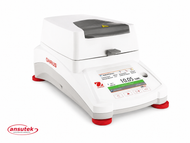
How to Measure Wood Chip Moisture with the OHAUS MB120 Moisture Analyser
Posted by Andy Cashen on 15th Jun 2026
How to Measure Wood Chip Moisture with the OHAUS MB120 Moisture Analyser
Wood chip moisture content is an important quality measure for biomass, boiler fuel, pellet production, forestry, timber processing, and general process control. Moisture levels can affect weight, energy value, storage behaviour, product quality, transport cost, and customer acceptance.
The OHAUS MB120 Moisture Analyser gives operators a fast, repeatable way to check moisture content using a loss-on-drying method. Instead of waiting hours for a traditional oven-drying test, the MB120 can provide a practical moisture result in minutes when the method is correctly set up and validated.
This guide explains a practical starting method for testing wood chips with the MB120, including sampling, sample preparation, drying settings, safety notes, troubleshooting, and record keeping.
For more information on the OHAUS MB120 Moisture Analyser, visit our webshop here:
OHAUS 30246943 MB120 Moisture Analyser
Important note before you start
This guide is provided for general information only. Ansutek accepts no liability for results, losses, or decisions arising from its use. Users should validate the method for their own application before relying on the results.
How the MB120 measures moisture
The OHAUS MB120 Moisture Analyser works by heating a sample and measuring the weight loss during drying.
The instrument records the starting weight of the sample, applies controlled heat, then calculates how much weight is lost as moisture is driven off. The result can be displayed as % moisture content.
For wood chips, this makes the MB120 useful for quick routine checks, production monitoring, and quality control where fast feedback is needed.
Recommended starting settings for wood chips
The following settings are a useful starting point for testing wood chips on the OHAUS MB120
Drying programme: Standard
Drying temperature: 105 °C
Switch-off criterion: A60
Result display: % Moisture
Sample size: 5 g to 10 g
Start mode: Automatic, if suitable
Sample preparation: Thin, even layer
These settings may need to be adjusted depending on the wood chip type, chip size, moisture level, and how closely the result needs to match a reference oven method.
Step 1: Take a representative sample
Good moisture testing starts with good sampling.
Wood chip moisture can vary throughout a pile, bin, bag, trailer, or process stream. Surface material may be drier, while deeper material may hold more moisture.
Where possible, take several small portions from different areas and mix them together before testing. This helps create a more representative sample.
Avoid testing only one large chip or one small handful from the surface, as this may not reflect the true moisture content of the bulk material.
Step 2: Prepare the sample
Place the sample evenly across the sample pan. The layer should be thin and spread out as much as practical.
Try to avoid large heaps, clumps, or stacked chips. A thick or uneven sample can dry slowly and may give inconsistent results.
For best repeatability:
- Use a similar sample size each time
- Spread the chips evenly across the pan
- Avoid very large pieces if they are not typical of the sample
- Keep the sample preparation method consistent between tests
If the wood chips are large or uneven, consider breaking them down to a more consistent size before testing, provided this does not change the sample in a way that affects the result.
Step 3: Set up the MB120 method
On the OHAUS MB120, create or select a method using the recommended starting settings:
Drying programme: Standard
Temperature: 105 °C
Switch-off criterion: A60
Display result: % Moisture
The A60 switch-off setting means the analyser will stop when the rate of weight loss has slowed to the selected automatic endpoint condition. This is useful for routine testing where a repeatable automatic finish is preferred.
If the test ends too soon or the result does not match your reference method, the switch-off setting may need to be adjusted.
Step 4: Run the test
Place the empty sample pan on the analyser and tare the instrument.
Add the prepared wood chip sample and spread it evenly across the pan.
Close the heating chamber and start the test.
During the test, the MB120 will heat the sample and continuously monitor the weight change. Once the drying endpoint is reached, the analyser will stop and display the result as moisture content.
Record the final moisture result, method used, sample weight, temperature, date, operator, and sample description.
Step 5: Check the result against a reference method
Before using the MB120 result for important reporting or customer acceptance, compare the result against a recognised oven-drying reference method.
Run the same type of sample using both methods and compare the results. If the MB120 result is consistently higher or lower than the reference method, adjust the temperature, switch-off criterion, sample size, or preparation method until the results are acceptable for your application.
Once the method is validated, keep the settings consistent.
Safety note: wood chips can char or overheat
Wood chips are an organic material and may char, smoke, or overheat if the drying temperature is too high or if the sample is unsuitable.
Do not leave testing unattended during method development.
If charring, smoke, burning smell, or discolouration occurs, stop the test and reduce the drying temperature or review the sample size and preparation method.
Always follow the safety instructions in the OHAUS MB120 operating manual.
Troubleshooting tips
The result is not repeatable
Check the sampling and sample preparation first. Inconsistent samples are one of the most common causes of inconsistent moisture results.
Use similar sample sizes, spread the material evenly, and make sure the wood chips being tested are representative of the bulk material.
The test takes too long
Try using a slightly smaller sample size or spreading the sample more evenly across the pan.
Do not simply increase the temperature without checking for charring or changes in the sample.
The result is lower than expected
The sample may not be drying completely, or the test may be stopping too early.
Review the switch-off criterion and compare the result with a reference oven method.
The result is higher than expected
The sample may be overheating, charring, or losing volatile material other than water.
Check the sample after testing and reduce the temperature if required.
Record keeping
For reliable quality control, keep a clear record of each test.
Recommended records include:
- Date and time
- Operator
- Sample description
- Sample source
- Starting sample weight
- Drying temperature
- Switch-off criterion
- Final moisture result
- Any unusual observations, such as smoke, charring, or large sample variation
Good records make it easier to compare results over time and identify process changes.
Summary
The OHAUS MB120 Moisture Analyser is a practical tool for fast wood chip moisture testing. With careful sampling, consistent sample preparation, suitable drying settings, and validation against a recognised reference method, it can provide useful moisture results for production and quality control.
A good starting method is:
Standard drying programme, 105 °C, A60 switch-off, % Moisture result, and a 5 g to 10 g sample spread evenly across the pan.
For help selecting, setting up, or validating an OHAUS MB120 Moisture Analyser for your application, contact Ansutek.
View the OHAUS MB120 Moisture Analyser here:
OHAUS 30246943 MB120 Moisture Analyser